Calibration laboratorys listed in Houston
See all 6 in Houston →- 1ISO/IEC 17025 Accredited
Aldinger Company provides ISO/IEC 17025-accredited on-site and mail-in calibration services for test and measurement equipment. Founded in 1972, it serves customers across Texas and beyond.
- 2A2LA ISO/IEC 17025 accreditation · CETA certification
Allometrics provides calibration, metrology, and controlled-environment certification services, including on-site calibration. Located in Webster, Texas, it has served clients nationwide since 1976.
- 3ISO/IEC 17025:2017 Accredited Laboratory · A2LA accreditation
DTECH Calibration & Tools provides in-house and on-site calibration, instrument repair, and pickup and delivery services. Its Houston laboratory is ISO/IEC 17025:2017 accredited by A2LA and serves industries including oil and gas, manufacturing, automotive, aerospace, and pharmaceutical.
- 4A2LA Accredited
Gulf Coast Calibration provides calibration services for industrial tools and instruments, including electrical, torque, pressure, temperature, dimensional, and gas-monitoring equipment. It also provides testing for electrical safety equipment such as gloves, grounding cables, jumpers, and hot sticks.
- 5ISO/IEC 17025 Accredited Laboratory · ANSI National Accreditation Board (ANAB) accreditation
Southwest Calibration Service, Inc. provides ISO/IEC 17025-accredited, NIST-traceable calibration and conformity testing for manufacturers in energy, aerospace, pharmaceutical, industrial, and chemical processing industries. Founded in 1988, it also provides metrology equipment sales and onsite calibration services.
Get free quotes from calibration services in Houston
Takes about a minute. Free, no obligation; providers reply to you directly.
A calibration certificate landed on my desk once, and for about thirty seconds I stared at it like it was written in Martian. NIST-traceable, A2LA accredited, measurement uncertainty ± 0.002g — it was a quality audit in two days and our production manager was asking if we were “covered.” I had no idea what I was looking at.
That experience sent me down a research hole that most people only enter under duress. Houston has one of the most concentrated industrial corridors in North America — oil refineries in Deer Park, aerospace near Clear Lake, pharma ops in the Texas Medical Center. The calibration market here is serious, and knowing who to trust matters more than most quality teams realize until they’re scrambling.
The Short Version:Houston has at least 10 accredited calibration labs serving oil & gas, pharma, aerospace, and manufacturing. For most needs, look for A2LA ISO/IEC 17025 accreditation and NIST-traceable certificates first. If you can’t ship equipment, prioritize mobile/onsite services. If you’re under audit pressure, Allometrics offers 48-hour expedited turnaround.
Key Takeaways:
- ISO/IEC 17025 accreditation (verified through A2LA’s public database) is the non-negotiable baseline — not something you take a lab’s word for
- Houston’s industrial mix means most top labs specialize: volumetric/pipette for pharma, torque/pressure for oil & gas, precision dimensional for aerospace
- Mobile calibration isn’t a convenience upgrade — it’s often the difference between keeping a production line running and a week of downtime
- Expedited 48-hour service exists, but you need to know which labs offer it before your auditor calls
The Labs Worth Knowing
Houston’s calibration market is not a commodity. The difference between a compliant certificate and a certificate that actually holds up under FDA or ISO 9001 scrutiny comes down to accreditation scope — specifically, what a lab is authorized to calibrate and at what ranges.
Here’s how the major players stack up:
| Lab | Accreditation | Specialty | Onsite? | Expedited? |
|---|---|---|---|---|
| Trescal Houston | A2LA #2516.01, ISO 17025, Z540-1, Z540.3 | Volumetric, pipettes (0.1µL–1,000mL), syringes | Check scope | Contact for options |
| Allometrics (Webster, 20 mi SE) | A2LA #2039.01, ISO 17025 | Scales, balances, precision weighing | Yes — mobile lab | 48-hour expedited |
| Rothe Development | ISO 17025 | Broad scope; SE Texas’ most diverse | Yes — Houston-wide | Contact |
| Aldinger (3130 Rogerdale Rd) | ISO/IEC 17025 | Balances to torque wrenches, industrial/energy/medical | Contact | Contact |
| ESToolCal (Pasadena) | NIST-traceable | Torque, pressure, dimensional | Yes | Fast turnaround noted |
| DTECH | ISO 17025 | Gagemaker calibration, oil & gas, automotive | Contact | Contact |
Pro Tip:Before you call anyone, pull up the A2LA directory at a2la.org and verify the certificate number yourself. A2LA certificates list exact parameter scopes — you want to confirm a lab is actually accredited for your equipment type, not just “calibration in general.”
What Houston’s Industrial Mix Actually Demands
Here’s what most people miss: calibration isn’t one thing. A pharma company at the Texas Medical Center has completely different needs than a machining shop serving offshore rig manufacturers in Pasadena.
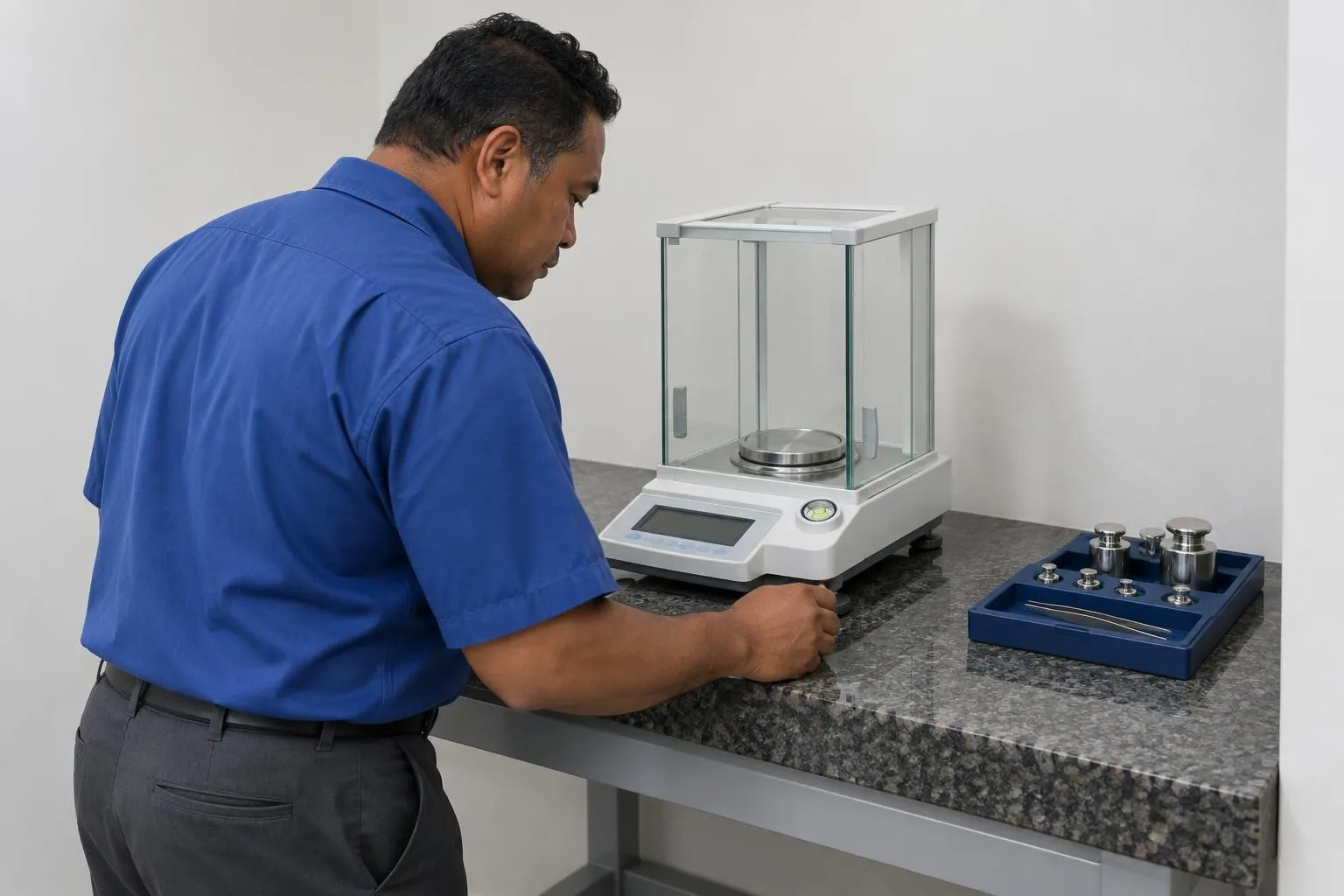
Pharma and life sciences need volumetric and gravimetric calibration — pipettes calibrated down to 0.1µL, analytical balances with documented measurement uncertainty, NIST-traceable certificates that satisfy FDA 21 CFR Part 211. Trescal’s Houston lab handles volumetric instruments up to 20,000 mL with A2LA scope that covers the full range. Allometrics has served the Texas Medical Center specifically for 50+ years — that institutional knowledge matters when an auditor starts asking detailed questions.
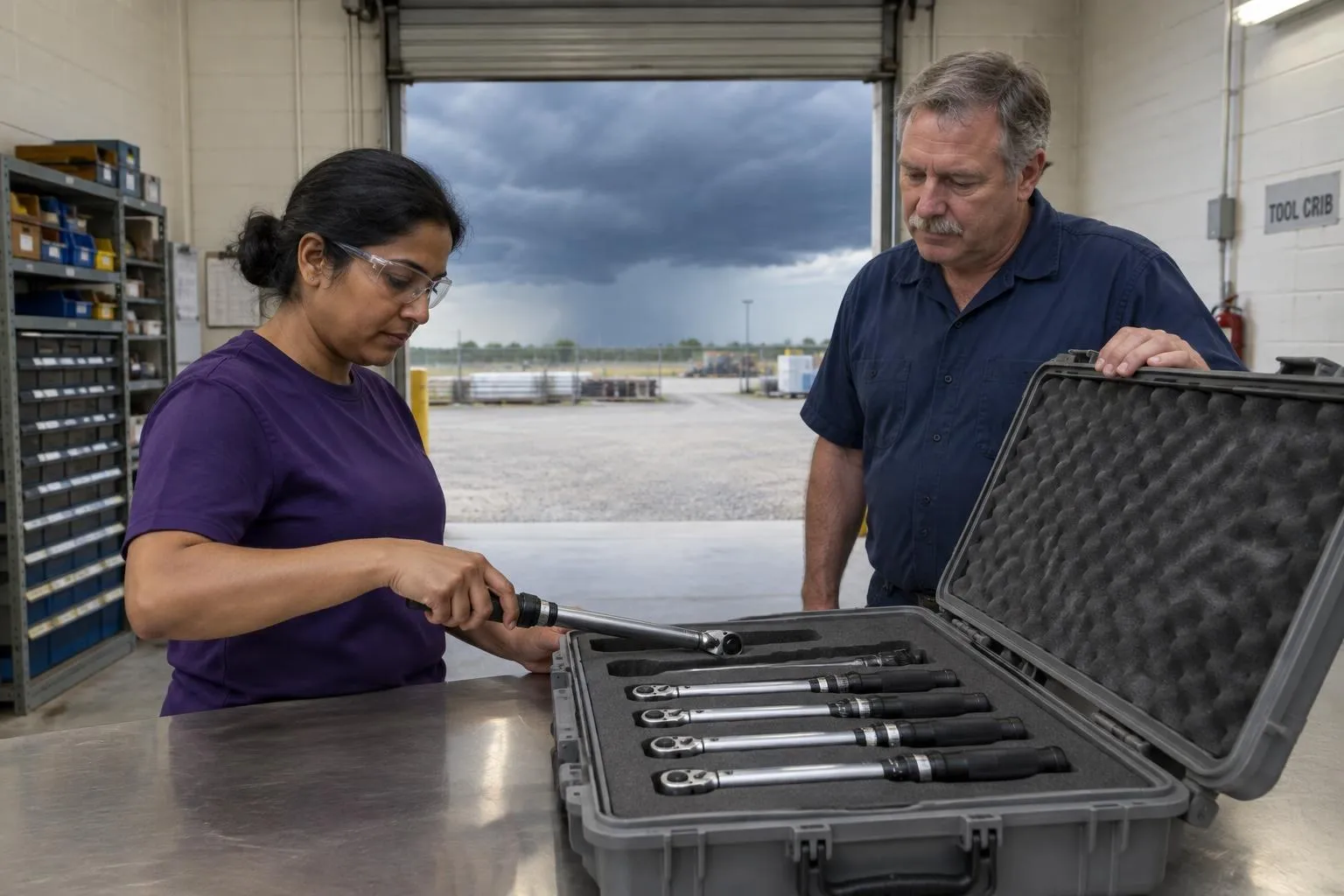
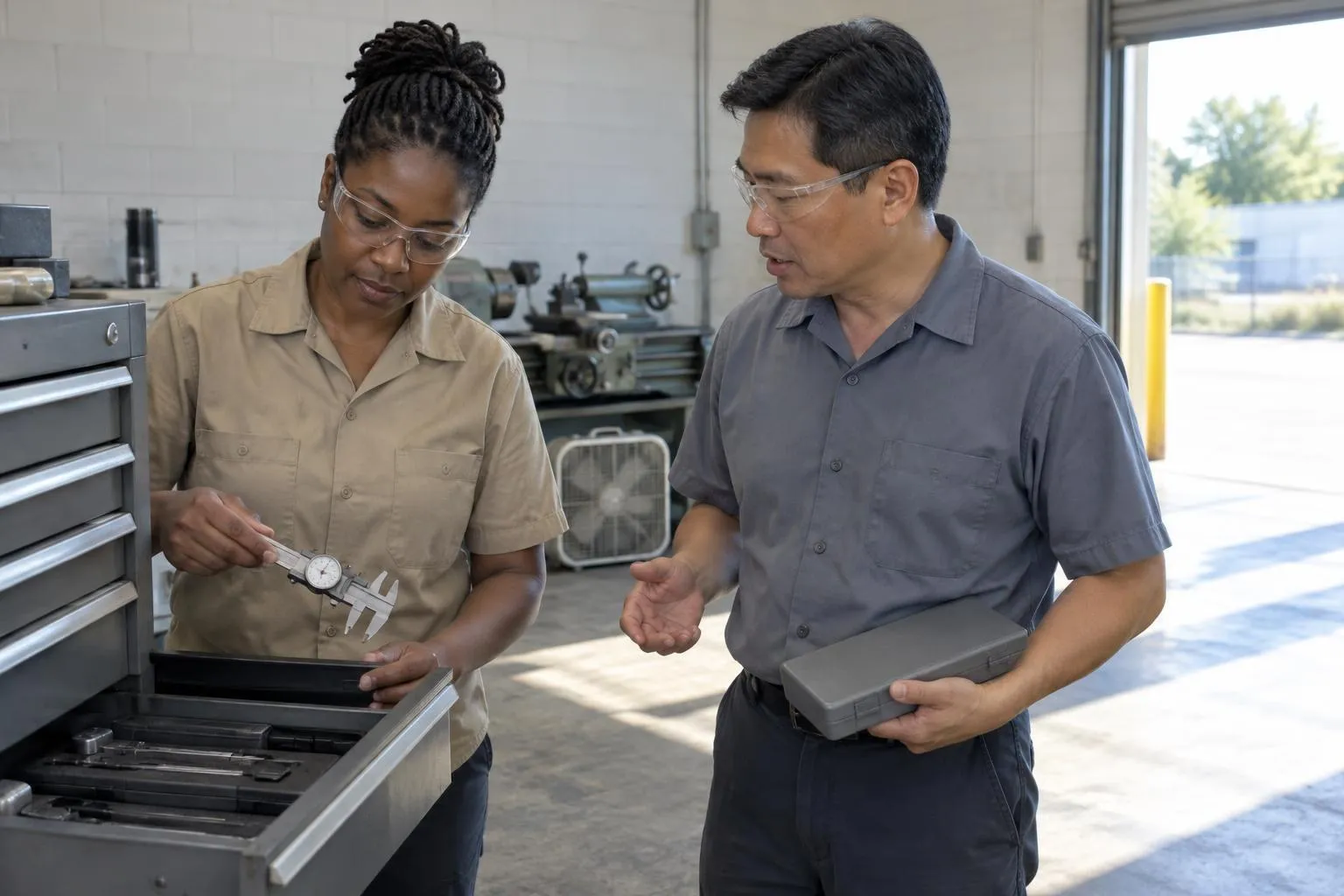
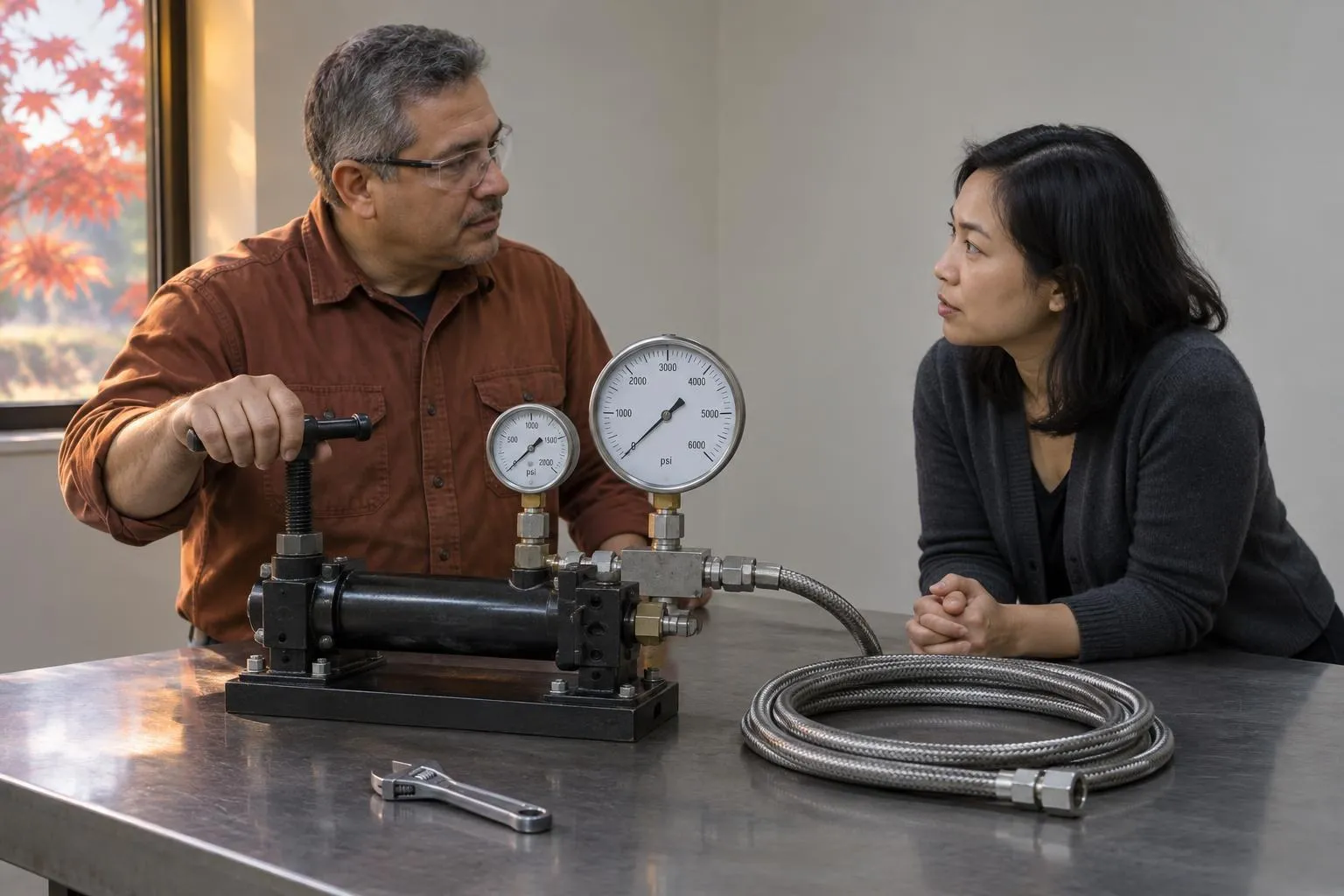
Oil, gas, and chemical plants in Deer Park and Pasadena need torque wrenches, pressure gauges, and dimensional tools calibrated to tolerances that affect safety, not just quality. ESToolCal and DTECH cover this territory. DTECH runs Gagemaker calibration specifically — relevant if you’re in automotive or oilfield tubular inspection.
Aerospace near Clear Lake needs AS9100-compatible labs, dimensional calibration, and documentation that satisfies DCSA or OEM audit requirements. Allometrics explicitly names Clear Lake aerospace customers, and their 50-year track record isn’t incidental.
The villain in this story isn’t a bad lab — it’s assuming your current provider has scope coverage they may not actually have. Scope creep happens in reverse: labs sometimes issue certificates for equipment that falls outside their accredited range, and that certificate is meaningless in a serious audit.
Reality Check:“ISO 17025 accredited” printed on a website header means nothing by itself. The certificate number and the listed scope are what matter. A lab accredited for electrical calibration is not automatically authorized to calibrate your pressure gauges. Check the scope document.
The Onsite Question
Nobody tells you this until shipping has already cost you two weeks of lead time: for a lot of Houston manufacturing, you literally cannot take equipment offline. A pharma clean room doesn’t courier its analytical balances to Webster, TX. A refinery doesn’t pull pressure instrumentation off a running process.
Mobile calibration existed before it was trendy. Allometrics has operated a mobile lab since 1976 — their pitch to chemical plants in Deer Park is explicitly that they eliminate equipment shipping while you maintain production. Rothe Development runs onsite services across greater Houston. ESToolCal emphasizes fast turnaround for the same reason.
If downtime is your constraint, filter for onsite capability first, then check accreditation scope.
What You’re Actually Paying
Pricing in calibration is custom-quoted more often than not, but the general ballpark: NIST-traceable balance and scale calibration typically runs $100–$500 per instrument. Torque and pressure calibration tends to be higher — $200–$1,000+ depending on range and complexity. Expedited service adds a premium.
Allometrics offers 48-hour turnaround for audit emergencies. That service has a price, but if the alternative is a failed audit, the math is straightforward.
Get quotes from at least two labs and compare scope coverage alongside price. The cheaper certificate that doesn’t cover your actual equipment range is not cheaper.
Practical Bottom Line
If you’re sourcing calibration services in Houston for the first time — or auditing your current provider — here’s the sequence that actually works:
- Identify your equipment types and ranges before you call anyone. Know whether you need volumetric, gravimetric, torque, pressure, dimensional, or some combination.
- Verify accreditation scope at a2la.org using the lab’s certificate number. Confirm they’re authorized for your specific parameters.
- Decide onsite vs. lab drop-off based on whether you can afford shipping time and whether you can take equipment offline.
- If you’re under audit deadline, call Allometrics at 281-474-3329 directly — 48-hour expedited is real, but you need to arrange it in advance, not the day before.
- Browse the Houston calibration directory to see the full provider list with contact details and service categories.
For a deeper look at what calibration accreditation actually means and how to evaluate any lab’s credentials, the Complete Guide to Calibration Laboratories covers the full framework — accreditation bodies, scope documents, measurement uncertainty, and how to read a calibration certificate before you sign off on it.
The industrial Gulf Coast is not a market that forgives sloppy measurement traceability. The labs are good here. You just need to know which ones are right for your specific application.
Done reading? Get quotes from calibration laboratorys in Houston.
Takes about a minute. Free, no obligation; providers reply to you directly.
Popular cities:
Nick built this directory to help quality teams find accredited calibration labs without wading through unaccredited shops that can’t support an ISO audit — a gap he discovered when sourcing calibration vendors for a manufacturing client whose instrument traceability chain failed a third-party audit.